The problem with mesquite
Mesquite grows from a buried bud ring below the soil surface, which is why you can cut one down, burn the stump, and still have a living tree three feet out from the trunk a year later. It's drought-hardy, fire-hardy, and just about mow-proof. Left alone, it takes over grazing ground, punches thorns into hay, and turns a pasture into a brush pen.
How we actually kill it
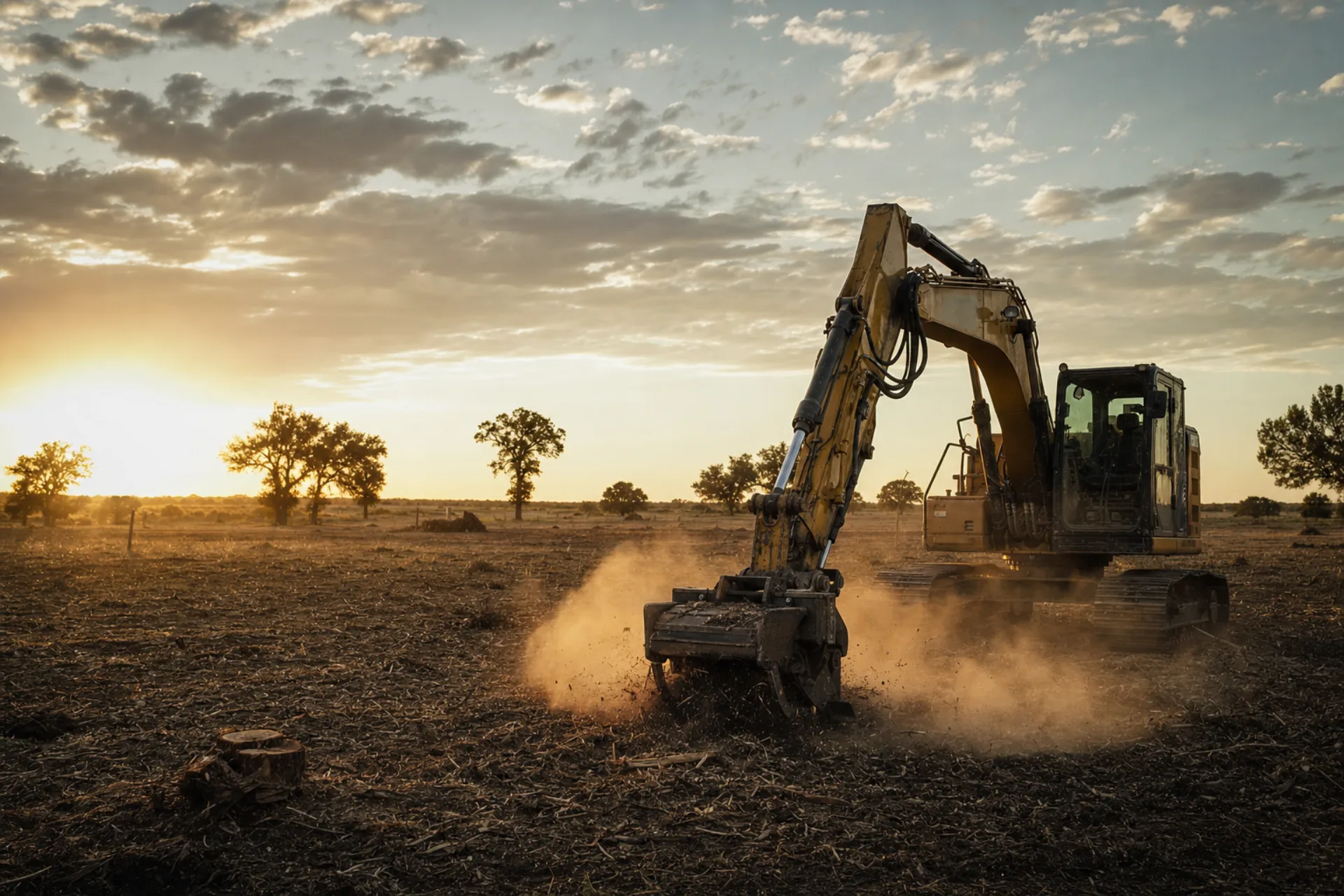
We grind mesquite out below the bud ring. That's the buried zone where new growth comes from. Cutting above the ring just encourages it; grinding under it breaks the regrowth cycle. One clean pass typically eliminates 85 to 90 percent of the mesquite on a tract, and the stragglers come up weak enough that a follow-up mow or spot-treat finishes the job.
What the pasture looks like after
Clean ground, thorn-free hay fields, better forage response once the native grasses come back in. On ranches we've worked, carrying capacity picks up noticeably within a season or two as the grass competes without the mesquite stealing water and light.
When mesquite removal gets paired with other work
Mesquite rarely grows alone. Most pastures we clear have mesquite plus cedar plus brush, and the right job ships all three at once: mulch the trunks, grind out the bud rings, brush out the understory. For whole-property pasture restoration jobs, see our land clearing page. Quoting it as one pass saves time and money versus three visits.